by Candice M
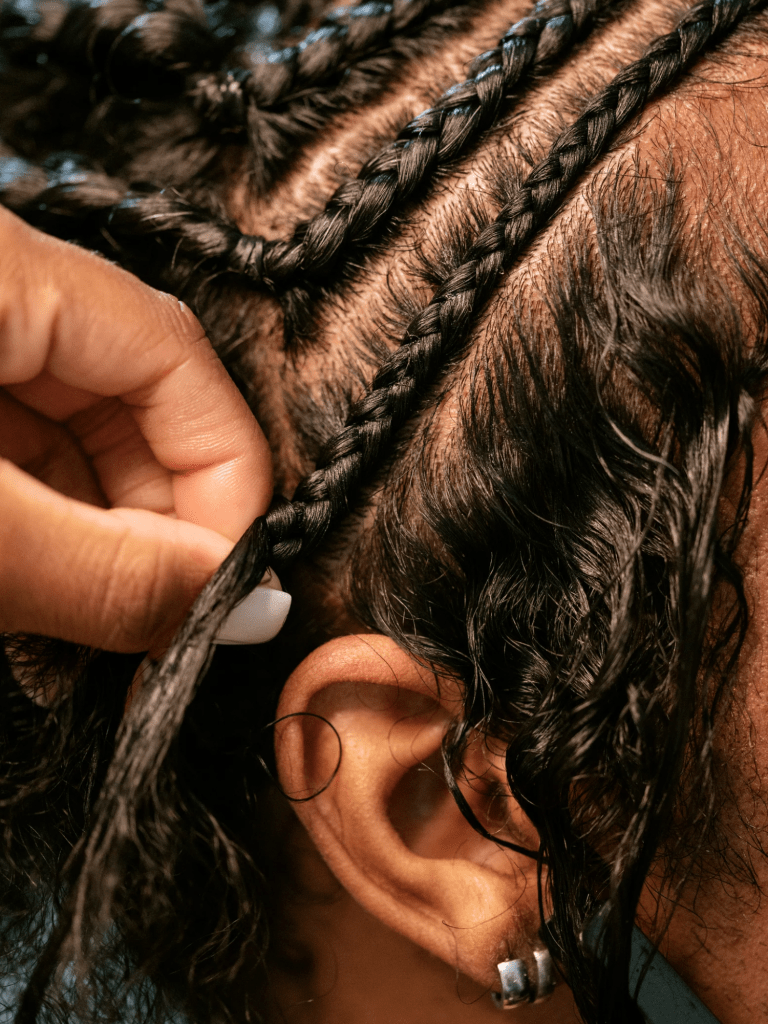
For decades, protective styles like box braids, twists, and cornrows have been a cornerstone of Black and textured hair care. These styles are more than just aesthetic; they help protect natural hair from breakage, promote length retention, and provide a low-maintenance alternative to daily styling. But what happens when the very hair we trust to protect our natural strands is actually harming us?
Recent studies and consumer reports have revealed that some synthetic braiding hair contains harmful chemicals that can lead to scalp irritation, allergic reactions, and even long-term health concerns. Many synthetic hair brands are made from plastic fibers such as kanekalon, toyokalon, or other synthetic polymers that are often coated with alkaline-based chemicals to prevent tangling, increase longevity, and make the hair appear shinier. However, these chemicals can cause scalp burns, itching, and inflammation—commonly referred to as “braid itch” or “braid burn.”
Some of the harmful substances found in synthetic braiding hair include:
- Alkaline Coatings: Used to make synthetic fibers smoother, but they can be too harsh on the scalp.
2. Formaldehyde: A known carcinogen that can cause irritation, allergic reactions, and long-term exposure risks.
3. Toluene and Other VOCs (Volatile Organic Compounds): These are often found in synthetic materials and can be harmful when inhaled over long periods.
Many consumers have reported experiencing severe scalp irritation, breakouts along their hairline, and even hair loss after installing braiding hair. Unfortunately, this issue is rarely discussed in mainstream beauty conversations.
Why Is This Happening?
The beauty industry, like many other consumer-driven markets, often prioritizes profit over safety. Many major hair brands are owned by companies that are not focused on Black hair health—they are focused on mass production and sales. Because of this, synthetic hair products are not always tested for scalp safety or long-term health effects.
Additionally, there is a lack of transparency in ingredient labeling. Unlike skin and hair care products, synthetic hair does not always come with a full list of the chemicals used in its production. This means consumers often have no way of knowing what they’re putting on their scalps.
Are We Living in a World We Can’t Trust?
It’s frustrating and disheartening to realize that something as simple as braiding hair—something deeply tied to culture, identity, and self-expression—could be harming us. It begs the question: is the world so cruel that we can’t even trust the products meant to enhance and protect our beauty?
The truth is, capitalism and corporate greed have made it difficult to trust industries that do not prioritize the health of Black and textured hair communities. But that doesn’t mean we are powerless.
How to Protect Yourself
If you love protective styles but want to avoid harmful chemicals, there are ways to minimize your risk:
1. Soak Your Braiding Hair: Before installing synthetic hair, soak it in a mixture of apple cider vinegar and water (1 part vinegar to 3 parts water) for 15-30 minutes. This helps remove some of the alkaline coating and reduces scalp irritation.
2. Use Human Hair Alternatives: While more expensive, human hair is less likely to be coated in harmful chemicals and can be a safer alternative for those with sensitive scalps.
3. Support Safer Brands: Look for brands that specifically advertise chemical-free or scalp-safe braiding hair. Some emerging brands are creating synthetic hair with safer materials.
4. Listen to Your Scalp: If you experience itching, burning, or extreme irritation, remove the braiding hair immediately. No protective style is worth damaging your scalp.
5. Advocate for Transparency: As consumers, we have power. By demanding that brands disclose their ingredients and prioritize safer materials, we can push for change in the industry.
The reality is that we live in a world where we must be our own advocates when it comes to health and beauty. While it’s frustrating to constantly question the safety of the products we use, knowledge is power. By staying informed and making conscious choices, we can protect our hair, our health, and our future.
Braiding hair should be about more than just a style—it should be about care, confidence, and cultural pride. We deserve safe, high-quality options that don’t put our health at risk. Until the industry steps up, it’s up to us to do the research, spread awareness, and hold brands accountable.
The world may not always have our best interests at heart, but that doesn’t mean we stop fighting for what we deserve.
Let us know what you think? Leave your comments below! Don’t forget to subscribe and share!
 Kinky Hair Kulture 💫